Monday, 27 July 2015

How my mum's (mom's) advice could help YOU start your next innovation

How my mum's (mom's) advice could help YOU start your next innovation

My feet pointing forward

I was brought up in the North of England near (but not in) the city of Manchester famous for it's rain; Manchester United and a broad speaking common sense.

As I grew up there were a few mantra's in our family house that largely came from my mother. All of them are good, but the one that I think is useful for today's entrepreneur of stuff is:

"Your feet point forward"


Not rocket science I grant you, but let me explain why I think its relevant.

You see whenever you start an innovation there is a moment when I think "Crikey is this going to be any good". I guess that when you start out on something new you think the same.

  • Innovation fear is a natural part of the phenomena of creativity. 
  • Innovation fear is the outcome of betting on something that is not a sure bet.
  • Innovation fear is a prerequisite for innovation

Frankly if you are not thinking that the thing your about to innovate is scary, then you are not innovating my friend.

I have had fear making every single game; I have had a fear with every single business I set up; Heck even have fear writing these blog posts.

Making that first step can be daunting so it can be easier to procrastinate than to start.

Here are some of the feelings I have identified in myself that cause procrastination along with some hints at how I solve them.

1. The feeling of uncertainty


A feeling of uncertainty comes from not completely understanding what needs to be done. This gives me a feeling of great anxiety that sits squarely in my stomach. It gets me to um and err sometimes for days.

It is the lack of knowledge that creates this anxiety. Every innovator has to start from ground zero.

I counteract this feeling by reading. I read up on every thing I can to stem these thoughts. By increasing my knowledge I create a feeling of security that punches my uncertainties squarely on the nose.


2.The feeling of making something that people will think crappy


I'm not alone on this one. Earnest Hemingway once wrote "the first draft of anything is crap".

At the risk of sounding all "life coachy", failure is the nemesis of everyone. But really it shouldn't be. Failure is a natural part of the risk of making something new.

I've made games for a living. In my business it seemed at times that there were journalists bent on being the games equivalent of Jeremy Clarkson. They made a living trashing my living. This hurt for sure but then there were reviews that were glowing.

I counteracted these fears eventually by not reading ANY review. I made my focus on the development of work that targeted at the group of people I knew intimately and made products that I knew would be of value to them... not some twenty something journo with a Clarkson crush.


3.The feeling of frustration

Sometimes when I start a new project there are moments when the signals from my head and my subsequent actions don't seem to match. Its like that time when I tried to learn guitar; or when I tried to stand up on a surf board or tried to learn the front crawl. That feeling of shear frustration has me rage quitting like a teenager.

I counteract this one by programming myself to realise that procrastination because you are no good at a thing is like being a toddler crying because he cant make his Lego right. I try to recognise this build up and take a break sure in the knowledge I WILL come back to it. As we all know ignoring something wont make it go away.

There comes a point though that I may realise its kind of making me ill or worse the results are still shocking. At this point I delegate the task to someone who knows more about it than me.

Those Wise words from my Mum (Mom)


If you are going to innovate you have to move forwards... and as my mother has helpfully pointed out for all these years is the way your feet point.

If you find yourself procrastinating over your innovation banish those silly feeling because everyone has them.

Remember your feet point forward and make the step to innovation glory.

You know it makes a lot of #Mancunian sense.

If you liked this


I hope you find this article interesting, check out my ebook,  Innovation Muscle. Its a short sharp read as to how you and your team can innovate fresh powerful ideas. Using these processes you will be able to create ideas that punch above their weight.

Innovation Muscle
Techniques to Make your Innovations Punch Above their Weight


Check out my book by clicking here: INNOVATION MUSCLE

Anyone purchasing the book will receive not one, but TWO FREE mini e-books that are supplied directly as PDF files to your inbox. These can be distributed to you team when starting a new project or used simply to sanity check your existing processes.

Until next time 


Paul


Thursday, 23 July 2015

How writing about how I wrote this post could help you with writing posts or in fact any idea

How writing about how I thought about this post could help you think of your next idea


Your idea has you stumped

You have an idea in your head. But you are struggling to push it across the line. Its an intangible feeling. Uncomfortable almost.

So what do you do about it?

Well at the risk of getting all shouty and "sergeant majory" about it.... blimin' shape yourself creative soldier! An idea stuck in your head is flaming useless to man nor beast.

What you need is a process to get you out of your malaise.

How do I do it? 


Well after a few iterations, I thought I would write an post about how I came up with the idea for this post. I hope you can use it as a metaphor for coming up with your own ideas too.

I have nursed the idea of this article for a while. The original thought was to write a "shouty" piece that gave people a call to action. Along the way (as I explain later) this mutated into the a case study on how I wrote THIS article.

It seem(s)*ed a cool way of writing about a paradox of how I came up with the idea would be a cool way of explaining it to you!

Writing about writing this post is a kind of reciprocating loop, its what in programming terms can cause a computer to crash. Frankly its making my brain hurt trying to get it down but I will try.

*(I'll stop writing in present and past tense as its way too complicated).

First I realised that I needed to get my idea out of the back of my head and expose it to the air.

Ultimately the main thrust of what I was doing was simply to make a start. My inspiration behind this is the Chinese proverb that says "a good start is half way to success".

As ever with clichés the words are clever but it seems to me the making the start is often the hardest thing to do and therefore the "thing" that is stopping you from starting in the first place.

My I approach was/is to make the process of bringing an idea to the surface as friction free as I can and to let it emerge in baby steps. By programming myself to believe that each step is progress I find I am not stuck in an analytical loop and over thinking, In doing so I find I don't get stuck so "starting".

What did you do first?

My first step was/is to simply give the idea a name. In this case I called it "A Good Start is Half A Success". I had seen the quote in a book. Incidentally, note that the title didn't last through to the completed article.

If I let the idea swim around in my head I know that it is simply a waste of energy. The trick is to make the idea tangible. I do this by committing it to some form of media. I prefer pencil and paper really, but being the disorganized so and so that I am, I increasingly use Evernote. I know with Evernote my ideas are safe and further more can follow me around digitally. Paper just ends scrunched up at the bottom of my bag.

Here you can see the genesis of the idea as a screenshot. The observant among you will see my thought trains for future posts too!


As you can see the line is only short. Ideally it should contain all the triggers that inspired the idea in the first place. In this case I didn't do that.. its a case of do as I say I guess.

What is the next step?

My next step is to simple stop: First stage tick: Idea safely in the bag (or Evernote); Metaphorical pat on the back; on with my life.

Part of  my stopping is through shear laziness I admit, but there is method behind this too. What I am doing is to give my idea a period of time to let it gestate in my head.

You have two sorts of thinking: Fast and Slow

You see there is a notion described by Daniel Kahneman in his book Thinking Fast and Slow that the brain is kind of split down the middle. The fast brain is primitive and bases its thinking on a conservative instinct, the slow brain is more considered and liberally creative. Its a kind of fight between the Incredible Hulk and Bruce Banner. By trying to hammer away at your idea from the off you are more likely to be listening to the primitive brain.

I didn't want my idea ripped apart by the Incredible Hulk did I?


Its seems to me that to make contact with my retiring slow brain, I need to give it time and this is best done when the fast brain isn't noticing. I my case I like to walk my dog. In your case it could be that you process ideas as you sleep, when you exercise or do something completely different. With Archimedes it was when he was taking a bath.

You need to take action 

If you leave the idea ruminating too long your wait can can end up being forever. Its hard for me to give you a deadline on these things. Sometimes the urge to resolve the problem happens in days other times weeks, However, there comes at time when the slow brain has had his restful moment and you then need to take some time out to flesh it out. 

By now you know my shouty sergent major thoughts on that!

To move on I needed to get the idea into something tangible and to do this is simple: make it into something that can be touched or critiqued by a third party. Write it down.

Again, it's hard to start but I find that by following a simple ritual its like pulling the ripcord to a dilapidated petrol lawn mower. Once I get started the words start to come out and then whoosh off I go.

My ritual is to be in a place where there are no other distractions. I have a little background music courtesy of Mixcloud. I close the door to my little office and I begin.

I find (as I am with this article) once you start the feeling is great.

The state of "flow"

This feeling is what the neuroscience lot call "flow". When I enter this, a conversation with my slow creative brain wakes up. He stops dawdling and looking at email, social media and the like and the flashes of inspiration come thick and fast.

As I write this I used a word processor over a notebook. I choose this as I am a fast typist. The speed at which I can download the contents of brain is approximately comparable with my thoughts.

In my first pass at writing I simply let the words flow out of my fingers. I chastise my self for using the back space to correct myself. I focus on ignoring the wiggly red lines that jump out at me almost shouting at me to correct them.

If you stop to do this, your fast (Incredible Hulk) brain takes control and you lose momentum critiquing the work. Given half a chance this "hulky brain" will tell you that the idea sucks and you can evan find yourself grinding to a halt.

As I have mentioned in my previous post about John Cleese "when you are being creative then nothing is wrong". Keep being creative.and don't criticise yourself.

Key to it though is to keep on writing. I try not to stop and this stopping means any time you start to move into a correction mode. I only stop when I think my ideas are emptied form my head.

Take a breath

Once I have reached this stage I take another breather. This gives chance for my now articulated idea to brew like a pot of tea. Sometimes I even get a pot of tea!

With tea drunk and (as it happens) the dog walked I then enter the my critical mode.

I read through what I have written and correct it over a series of iterations. I use the notion behind agile and lean thinking... at this point. Initially I go back and corrected all those wiggly admonishments that my word processor shouted at and kind of reformat the order of the ideas and sentences that didn't make sense; I then read; test it on myself and iterate what I think needs changing.

The evolution of the post started as "a good start is half a success". Along the way and with iterations it occurred to me to write about how I wrote this. The idea mutated to what you now see. It resulted in some  pretty complex use of English because of the nature as I switched between the present tense of how I am writing compared with what I actually eventually wrote. (I guess some of it may still be wrong. If it is please tell me and I will iterate again).

I then spent time getting the text tighter and tighter. By this I mean reducing the word count. I aim to be writing sales copy to myself. A good friend of mine and very successful multi-millionaire businessman once told me that you should image yourself shouting the words out whilst stood on a box.

Sometimes as I read the stuff back I emphasise words in CAPITAL letters as a mechanism to appear as though I am shouting really loud, but as you can see none made it into this article (LOL).

Remove the fluff from the idea

My edits were ruthless. For example my original article rambled because of my attempt to squeeze the development of product ideas as well as the article. I decided to strip this out but saved the copy into Evernote for another article in the future.

I took about two hours for this process; drank a cup of tea and walked the dog around the block too.

As I come to the conclusion I hope that this metaphor helps with your idea generation process. It was certainly cathartic for me and generated another couple of articles in the process!

If you liked this

I hope you find this article interesting, check out my ebook,  Innovation Muscle. Its a short sharp read as to how you and your team can innovate fresh powerful ideas. Using these processes you will be able to create ideas that punch above their weight.

Innovation Muscle
Techniques to Make your Innovations Punch Above their Weight


Check out my book by clicking here: INNOVATION MUSCLE

Anyone purchasing the book will receive not one, but TWO FREE mini e-books that are supplied directly as PDF files to your inbox. These can be distributed to you team when starting a new project or used simply to sanity check your existing processes.

Until next time 


Paul

How to avoid premature innovation

The Selfie Stick and Example of Premature Innovation


I have just come back from a holiday in Venice. The city is beautiful and only slightly marred by the hundreds of people brandishing selfie sticks. This irritating innovation seems to have completely captured a moment in many people's lives.
So you'd have thought then that fellow who invented it must be planning his retirement living off the income from this?
Well if you did, you'd be wrong.
It turns out that the genesis of this simple little gadget is a sorry example of Premature Innovation a problem that affects all innovators at some point in their career.
Do you think you suffer from premature innovation? Let me tell you how to solve it.
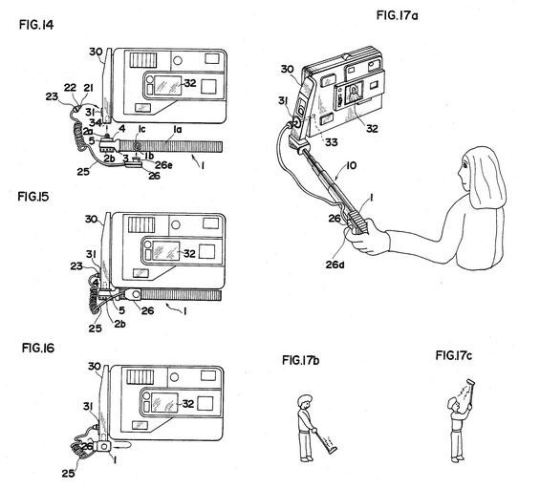
The first form of a selfie stick was invented in 1980 by a chap called Hiroshi Ueda. Hiroshi was a keen inventor a kind of Wallace from Wallace and Gromitt.
His idea occurred to him when he worked at Minolta, a Japanese company that makes cameras. As a keen photographer Hiroshi would take pictures of his family and naturally  want to appear in them.
He told the BBC:
"When I was in the Louvre Museum in Paris, I asked a child to take a photo of us, but when I stepped away, the child ran away with my camera"
When he returned home to Japan he came up with the idea of the "Extender stick". It was telescopic and also had a little mirror that attached to the camera so that the photographer could see the picture he was taking.
The original patent for the Selfie Stick
Minolta thought that the idea was brilliant and set the idea into production.
It turned out to be a flop. Research showed that the women of the time were embarrassed at taking photos of themselves... how times have changed eh?
Minolta dropped the idea and did not renew the patent when it expired in 2003.
He said to the BBC:
"My idea came too early, but that's just one of those things".
You have to admire Hiroshi's pragmatism.
What may have helped Hiroshi and Minolta would have been to sanity check the innovation by using the Ten Types of Innovation.
The Ten Types of Innovation: The discipline of building breakthroughs by Larry Keeley describes ten different forms of innovation that they found after studying the subject for years.
Distilled down, it suggests that innovators should consider the following questions:
  1. What ways could the product make money ?
  2. Who could the business’s partnership to make products better?
  3. How you could you approach the way people or equipment are used within the business to make the product?
  4. How could changing the work practices introduce a new innovation because of the product?
  5. What features in a product’s functionality could be used that would be good for business?
  6. What additional products could be made that complement the existing idea?
  7. How would you make customers love their interactions with your product?
  8. How do you get the products to your customers in a new and innovative way?
  9. What ways can you make your product recognisable to your customers?
  10. How can you make a meaningful relationship between the product and the customer?
As a good salesman will tell you, when selling a proposition it’s so much easier to sell a solution that covers more than one base.
Often innovators will concentrate their efforts on the development of a product.
It certainly seems to be the case with Hiroshi's Extender stick. By not taking into account the quality of the resulting image; the difficulty of managing a heavy camera on the end of a stick; or the culture of taking photographs at the time. His idea was relegated to another Chindogu style "un-useless" invention. You can see my collection of Chindogu here.
When you are in the process of considering innovation, I’d advise that you make sure that your idea has solutions that consider all the areas innovation can touch… the Business Configuration, the Customer Experience and the Product Offering.
Maybe If he had stuck with it, today's selfie stick could have been the Minolta Extender...
But as Hiroshi says:
"I patented about 300 ideas, so that was just one of them. We call it a 3am invention - it arrived too early."
A premature innovation.

FURTHER INFORMATION

I hope you find this article interesting, check out my ebook,  Innovation Muscle. Its a short sharp read as to how you and your team can innovate fresh powerful ideas. Using these processes you will be able to create ideas that punch above their weight.

Innovation Muscle
Techniques to Make your Innovations Punch Above their Weight

Anyone purchasing the book will receive not one, but TWO FREE mini e-books that are supplied directly as PDF files to your inbox. These can be distributed to you team when starting a new project or used simply to sanity check your existing processes.

Photo licensed from Stock photo © Dangubic

Wednesday, 22 July 2015

How Harry Potter should sell his innovation

Harry Potter Sells His Innovation in Wand Technology


A black swan is a metaphor devised by Nassim Nicholas Taleb for an event or item that is totally outside the perception of a person’s consciousness that they write it off as an impossibility. The metaphor goes that there was a time not so long ago when the general perception was that all swans were considered to be pure white. When an actual black swan was subsequently discovered it sent the this notion into a metaphorical tail spin as people readjusted to the new normal. Up until this moment people simply did not believe in Black Swans.
As developers of innovative products it is our job to wrestle Black Swans into a manner we can exploit. At no point in our history have black swans been discovered at the rate they are now. But once we think we have one of our own how the heck do you convince the fragile inward looking world that what we have is a genuine thingy that will benefit the world?
Pity then a poor Harry Potter who having fallen on hard times decides he is going to sell magic wands to “muggles”.
Wand in hand he sets off to the Ministry of Defence (the Brit version of Homeland Security) and after many phone calls finally gets a 20 minute slot to speak to the oh so busy bloke in charge of procurement.
BLOKE: “So what have you here chap?”
HARRY: “The turbo wand 3000″
BLOKE: “But it looks just like a stick”
HARRY: “No its made of unicorn hair and a profusion of herbs and spices”
BLOKE: “But it still looks like a stick, what can it do?”
HARRY: “Well amongst heaps of other stuff it can slay a Basilisk”
BLOKE: “What the heck is a Basilisk?”
HARRY: “Its a huge monster thing that I managed to kill that was hiding inside my school”
BLOKE: “A monster in school where the heck is that and why do I not know about it?”
Before he knows it Harry is now explaining the entire plot to The Chamber of Secrets which while not War and Peace is not really easily done within the time frame of a busy executive. What he has done is to overwhelm the bloke with too many black swans. He needs to reign in his enthusiasm and up front attempts at demonstrating his expertise and attend the meeting to listen. The bloke simply doesn’t know what he doesn’t know and 20 minutes is not enough time to explain. The black swans Harry is revealing by definition is stuff he doesn’t believe exists. As far as he is concerned a Black Swan is pure BS.
Harry needs to have an open mind about what he is about to present and modify his pitch to introduce the swanage in a more palatable way! In other words let the customer describe his problem and then describe how the black swan can help with a solution.
BLOKE: “So what have you here chap?”
HARRY: “I have a solution to your problems”
BLOKE: “What do you mean by that?”
HARRY: “Can you tell me what the your biggest problem is?”
BLOKE: “Well your not going to believe it”
HARRY: “Try me… Maybe you explain it in your own words simply?”
BLOKE: “Our current call for innovation is to rid the Underground of an enormous lizard”
HARRY: “LOL…”
But this has nowt to do with you eh… your tech is just so cool right? But sometimes it can be so cool that muggles simply think its cold. We innovators need to overcome the desire to show off describing unicorns, basilisks and other war stories. We need to listen too.
When selling innovation as wizarding experts we can often forget how long we have invested in the idea. Concepts that appear trivial to us will be daunting to the consumer. Conversely problems to the consumer finds enormous we feel are small. And a small note here… it is the latter area where money is to be made.
With the agile mind you need to let the customer do the talking and measure the actual requirement. Muggles will burn 20 minutes talking about their problems. But as a polite boy/girl-wizard you can offer come back with a laser focused solution that we wizards knew was in always in your pocket!

FURTHER INFORMATION

I hope you find this article interesting, check out my ebook,  Innovation Muscle. Its a short sharp read as to how you and your team can innovate fresh powerful ideas. Using these processes you will be able to create ideas that punch above their weight.
Anyone purchasing the book will receive not one, but TWO FREE mini e-books that are supplied directly as PDF files to your inbox. These can be distributed to you team when starting a new project or used simply to sanity check your existing processes.

The image is licensed Copyright : © ITAR-TASS Photo Agency / Alamy

Tuesday, 21 July 2015

How to get the Incredible Hulk to estimate when he is going to complete his job


What the heck do these project management types actually do? Check what has been done; Make a list of what still needs to be done and guess how long its going to take for the rest of it to be done. Bosh my whole career distilled into one line. Obviously there’s a few nuances I have missed out here and there but there’s no escaping that at some one has to make a guess about the completion date.
So how do you do it? Let me tell you how.
Well at some point we have to get our team to commit to something and at times this it can be like pulling teeth. No creative wants to be responsible for tie-ing their own noose. You’d be forgiven for thinking that my recent zeal for Taleb’s Black Swan would have me throwing my arms in the air too and running a team with a mañana sense of there’s no chance of knowing what’ll go wrong so it will be done when its done philosophy. But being that at times in my career I have been the one paying the salaries I know how important it is to keep some sense of timely ambition. Creativity is not just the marshalling clever people to think “out of the box” in fact forcing them to think inside a box labelled “must be done before next mortgage payment due” can lead to some pretty good stuff too.
But there is a problem. No one can predict the future… As Nassim Nicholas Taleb describes in his book "The Black Swan: The Impact of the Highly Improbable".
So what do you do?
Generally at this point most people would reach out to their most trusted, reliable team member. The head guy (or girl). The grizzled developer with grey hair and a thousand war stories of late nights, loads of coffee and slashed scopes. However it turns out that beneath this façade lies a complex set of competing egos… it 's like working with the Incredible Hulk, a guy riddled with the conflicting opinions of a reasoned Gamma radiation scientist versus a raging 200 pound green monster.
To be fair it’s not just the head developer. Beneath all of us lies not one, but two complex decision making machines. The idea was first brought to the world’s notice by Daniel Kahneman in his book “Thinking Fast and Slow“. I recently watched a program on BBC science show Horizon that gave me a 40 minute synopsis of the ideas.
It turns out that your brain has two different competing solution mechanisms. One is a calm thinking analytical engine the Dr Bruce Banner if you will. The other is primitive lazy and prone to snap decisions otherwise known as our good friend Mr I Hulk. The idea is demonstrated by asking the simple question what is 2+2? Hulk knows the answer to this and so in quick sticks time will blurt out the answer leaving Banner to wait. However, ask Hulk 13*7 and he is likely to stay shtum and Banner will have to sing for his supper.
When the Banner side of the ego is thinking it expends a whole heap of energy. This is demonstrated in the show by getting people to walk while being asked questions. An easy question (2+2 et al) sees hardly a pause, but ask something hard and the people literally stop in their tracks to give additional compute power to their brains.
Given half a chance however then the Hulkster will intervene and while this is useful to have these sort of reactions if you are about to be punched in the mouth by a super villain, its probably best avoided if you want a reasoned answer. Hulk is riddled with what the psychologists call cognitive bias. He uses this as short cuts to reduce the power consumption in his answers, but sometimes they are wrong.
There are heaps of biases that ALL humans have as listed on this Wikipedia article. Some deal with peoples negative thoughts others with a spooky “anchoring” effect where there is a tendency of an individual to base an appraisal on the answer to a preceding question.
What is evident though is that we need to try and avoid working to a schedule defined by the Hulk. It follows therefore that relying on the *quick* set of answers given by a seasoned professional are more likely to be tinged hulk green.
Agile tries to circumvent this by asking the estimates in a more circumspect way. Hulk (initially) doesn’t know that this is being done and the answers are likely to be less prone to bias. Combine this by involving the while team and we are more likely to have an answer we can base some metrics on.
The team are asked to estimate not how long a work package will take to make, but rather how “complex” it actually is. Some PM’s try to get the team to get to a consensus on a number following the Fibonacci Sequence 1, 2, 3, 5, 10. The beauty of this is that the numbers are spread in a non linear way. It is often quite hard to estimate the difference between the complexity of something rated 21 and 22, but it is much easier to agree if it is either 21 or 13.
Conversion to days of work is done by multiplying it by a factor that defines how quick a team can complete each work unit… known as the team velocity. This velocity is monitored through out the development using a chart which I will describe another time.
So in short reduce your dependency on snap decisions, they are more than likely the opinions of a monster.
More of this in my new book Agile Fu available from Amazon.

FURTHER INFORMATION

I hope you find this article interesting, check out my ebook,  Agile Fu. Its a short sharp read as to how you and your team can innovate fresh powerful ideas.
 Agile Fu... Learn Agile Management in an Hour

Agile Fu: Learn Modern Agile Development in an Hour

Anyone purchasing the book will receive not one, but TWO FREE mini e-books that are supplied directly as PDF files to your inbox. These can be distributed to you team when starting a new project or used simply to sanity check your existing processes.

The photograph above is the copyright of the FILM COMPANY and has been licensed from Alamy

Monday, 20 July 2015

Basil Fawlty Teaches Innovation

Innovation From This Dweeb? 
Get Real!


If you thought that a guy like the one above couldn't possibly bring a h'penny of value to your creative world, you'd be dead wrong!
John Cleese is famous for being one of  Monty Python's Flying Circus. While he looks a bit dated and crazy in this picture (to be fair it was taken in 1975) he is actually playing character Basil Fawlty in the hilarious Fawlty Towers. He is an all round super clever bloke and definitely someone you should check out for creative inspiration.
If you're not convinced check out John in this video (ignore the German subtitles its worth it!)

Video of John Cleese talking about being creative

(Excuse me if you are British or of a certain age. You're unlikely to be shocked by this revelation).

Innovation Challenges Any Convention

What I have tried to do in my initial statement is to challenge the perception of the sort of person who is considered to be creative in the 21st century. These days a creatives aim to part of the "hipster tribe" who swan around Shoreditch; downtown New York or Silicon Valley drinking specialist coffee. The represent the cool end of innovation.  By pointing out that creative people are not always cut from this cloth, I'm trying to make you think in a different way.
I call this Smash Thinking. Part of my blog is to try an challenge readers with these sorts of thoughts.
Innovation is where an idea smashes into a set of contradictory thoughts and comes up with a solution that has not been considered before that is actually useful.
What's more I think anyone can do it.
But what do I mean about contradictory thoughts? I'd like to explain the different types of thinking you are going to set on a collision course to become an innovative thinker
The 2 thoughts are broadly labelled as convergent thoughts and divergent thoughts.

Convergent Thinking

A converging thought is one that is based on what is already known. It is the champion of the status-quo and is the safe thinking.
Think what your aging parent might advise your teenage self. Alternatively consider arrogant assumptions of the Captain of the Titanic as he sailed his "indestructible" ship across the Atlantic.
Its roots are based in the individual feeling safe in what has always been.
Convergent Thinking makes the assumption that the current state will always be like this and no iceberg on this planet could possibly rock the boat.
Wikipedia defines: Convergent thinking is a term coined by Joy Paul Guilford as the opposite of divergent thinking. It generally means the ability to give the "correct" answer to standard questions that do not require significant creativity, for instance in most tasks in school and on standardized multiple-choice tests for intelligence.

The Nudged Solution

People who build innovations based purely on convergent thinking evolve a solution by nudging it forward. They correct what has gone wrong before.
I find the the focus group mentality where consumers are asked to come up with innovation is trapped in convergent thinking.
As Henry Ford dubiously said “If I’d asked my customers what they wanted, they’d have said a faster horse please”.
My experience in interviewing customers for video game ideas is that they tend to describe the last game that they played and dress it up with something new.
While this nudging is a valid form of creation, it is unlikely to inspire the revelation that will catapult the idea to another level.

Divergent thinking

Divergent thinking is the opposite of the convergent. It champions the absurd and tries to come at the idea in a way that no one has thought about. It challenges all the assumptions that the convergent thinking has defined.
Wikipedia suggests that: Divergent thinking is a thought process or method used to generate creative ideas by exploring many possible solutions.

The Jumped Solution

People who truly innovate make a jump of thinking that catapult it to another level. If it's good it can lay waste to industries that have existed before. Consider how Netflix has altered how DVD rentals worked. Can you remember you remember queuing at Blockbuster? If you would have asked an exec at Blockbuster before Netflix they would never have seen it coming...
Jim Keyes CEO of Blockbuster- “Neither RedBox nor Netflix are even on the radar screen in terms of competition,” he said. “It’s more Wal-Mart and Apple.”  
I find that most stand-up comedians are exponents of divergent thinking.
Q: What’s Brown and Sticky?A: A stick
A funny joke sets up a convergent thought and then up ends it with a challenge that turns the whole thing on it head.
According to my mate* John Cleese “When you are being creative, nothing is wrong”.
When comedians make these sorts of comments we think this is funny. But if we can take this sort of thinking and apply it to the every day then it is innovative.
You could say then that another definition of innovation then is the art of applying foolishness to thinking.
This photograph is the copyright of the FILM COMPANY and has been licensed from Alamy
*I don't really know John Cleese but I would like too

FURTHER INFORMATION

I hope you find this article interesting, check out my ebook,  Innovation Muscle. Its a short sharp read as to how you and your team can innovate fresh powerful ideas. Using these processes you will be able to create ideas that punch above their weight.
Innovation Muscle640

Innovation Muscle Techniques to Make Your Innovation Team Punch Above its Weight

Anyone purchasing the book will receive not one, but TWO FREE mini e-books that are supplied directly as PDF files to your inbox. These can be distributed to you team when starting a new project or used simply to sanity check your existing processes.
FreeChecklists