Showing posts with label types of Innovation. Show all posts

Friday, 31 July 2015

The 4 idea principles that Bruce Lee gave me to gain inspiration for new ideas
The 4 idea principles that Bruce Lee gave me to gain inspiration for new ideas


BruceLee.jpg
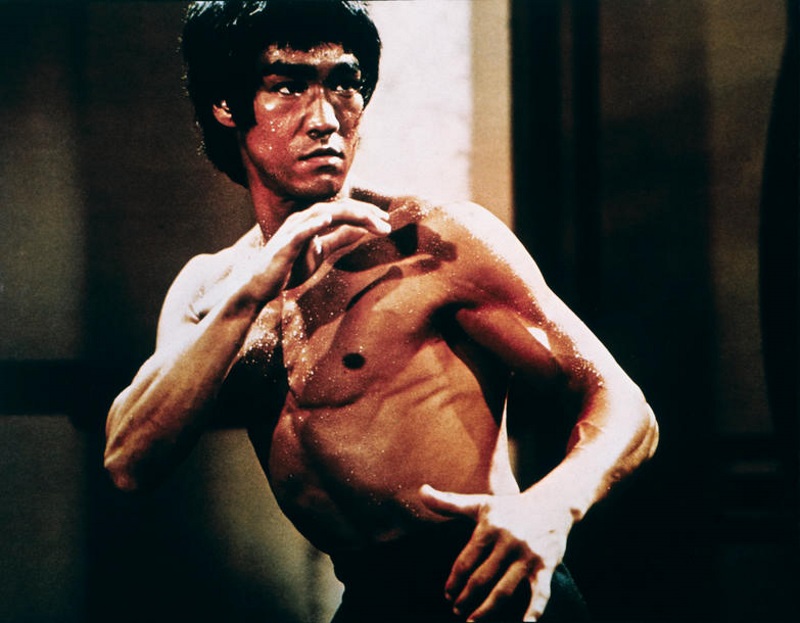
Bruce Lee, on-set of the Film "Enter the Dragon", 1973


Bruce Lee was not just a martial artist


Now I thought Bruce Lee was “just” a cool guy.


As an icon of the 1960’s and 70’s he was as cool as Elvis, good looking as a C2 Covette and what’s more he was buddies with Steve McQueen! What I was unaware of until very recently was that while he was brilliant physical athlete, acrobat and martial artist he was also a pretty clever bloke.


He studied philosophy at college and read avidly from cultures around the world: western, eastern; ancient and modern.
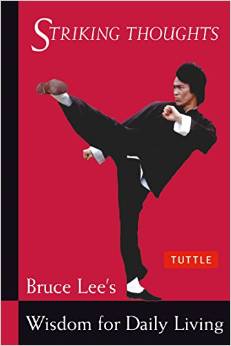
StrikingThoughts.jpg
Recently I have read the book “Striking Thoughts: Wisdom for everyday living". I have him to thank for the title of my first book Agile Fu and also for nuggets of wisdom in Innovation Muscle, my second title.


You can deep dive into the book and read it from cover to cover as I initially did or alternatively use it for reference from time to time.


Each time I do I am treated to another clever bit of well cleverness that leaves me thinking “how clever”.


The 4 Ideal Principles of Bruce Lee


In the Four Idea Principles Lee Describes how everyone should create ideas


  1. Find a human need, an unsolved problem
  2. Master all of the essentials of the problem
  3. Give a new “twist” to an old principles
  4. Believe in your idea and ACT


To develop this creative attitude Bruce suggests the following actions.


  1. Analyze focus on the wanted SOLUTION
  2. Seek out and fill your mind with FACTS
  3. Write down the IDEAS both sensible and seemingly wild
  4. Let the facts and ideas SIMMER in your mind
  5. Evaluate, recheck, settle on the CREATIVE IDEAS


Bruce’s book is available in physical form only from Amazon


If you are interested in the process of thinking or philosophy I urge you to dismiss any preconceptions that certainly I had over Bruce and check it out.

If for some reason you have never seen Bruce in action, here is some rare footage of Bruce in action in a Hollywood screen test.


If you liked this


I hope that you have found this article of interest.. If you did then I have written more ideas with techniques to make your innovations punch above their weight. I call my book Innovation Muscle. Its a short sharp read as to how you and your team can innovate fresh powerful ideas. Using these processes you will be able to create ideas that punch above their weight.


You can download my book by clicking here: INNOVATION MUSCLE


Anyone purchasing the book will receive not one, but TWO FREE mini e-books that are supplied directly as PDF files to your inbox. These can be distributed to you team when starting a new project or used simply to sanity check your existing processes.


Until next time 


Paul


Copyright : © Glasshouse Images / Alamy

Thursday, 30 July 2015

How these ladies generated an amazingly innovative idea by focusing on a problem not a solution

How these ladies used Innovative thinking to solve a health problem


An article by the BBC this morning brought my attention to the organization behind Buggie Boot Camp 


It explained how the UK has seen people interacting with sport and their general activity levels decline since the 2012 Olympics. 


The team at Buggy Boot camp have realised that rather than proceed with a standard marketing fitness awareness campaign they would work out the problems that women had attending a fitness class first and then set about these problems.


They discovered a reoccurring theme of problems that the ladies had when thinking about attending an activity class.

  • They lacked the confidence to go to a gym
  • They felt exercise was not fun
  • They had issues organizing child care.

Buggie Boot Camp solves all the problems

In essence the women bring their children to class and exercise is designed around mutually fun goals for mothers and their children alike. By being mutually fun for parent and child, the women gained confidence and also did not have to worry about child care.

Look at these ladies bench pressing their toddlers!

Look at the problems first rather than thinking of solutions

By looking at the reasons why people were not exercising, the team have created a solution to a real problem.


I too have found myself in situations in my career where I’d thought of a really good idea first only to find that the problem I thought of didn't really need a solution.


In Bruce Lee’s Striking Thoughts there is a great quote “Do not start from a conclusion”.


I have found that by holding "painstorm" meetings where the focus is on the acquisition of problems is a much more efficient way of acquiring problems that need innovative solutions. These problems are then solved in a separate meeting using people adept at solutions.

Painstorming instead of Brainstorming

When attempting to think of a new idea, people generally consider a brainstorming as a technique to come up with ideas. The idea behind a brainstorm is

  • To generate as many ideas as possible
  • Not criticise people’s ideas
  • Welcome unusual and daft ideas
  • Combine and improve ideas in a collaborative environment.

The problem is that brainstorming favours quantity over quality. The ideas generated still fall into the trap that they may present a solution to a problem that may not need solving. I think that Brainstorming is an inefficient way to come up with valuable ideas.

  • The ideas generated can be too fanciful for actual development 
  • The ideas generated are simply not inventive enough. 
This is because it is unfair to assume people can come up with an idea from a standing start.

A far better use of a crowd of people's time is to use a technique I call Painstorming.

Painstorming


A painstorm is where you get a divergent set of people for whom you wish to solve a problem and get them to define areas where your innovative team could solve a problem ie issues that cause them pain.

By framing the meeting into one where problem issues occur you are using your "customers" or "users" experience to full advantage rather than having them come up with a solution.

Run well you will find it chimes far easier with their desires to improve and will help define the issues to which an innovation could be brought about by a team with another set of skills to actually solve the problem.

In agile development we call these pains user stories. I will write a post about this another time.

If you liked this


I hope that you have found this article of interest.. If you did then I have written more ideas with techniques to make your innovations punch above their weight. I call my book Innovation Muscle. Its a short sharp read as to how you and your team can innovate fresh powerful ideas. Using these processes you will be able to create ideas that punch above their weight.


You can download my book by clicking here: INNOVATION MUSCLE


Anyone purchasing the book will receive not one, but TWO FREE mini e-books that are supplied directly as PDF files to your inbox. These can be distributed to you team when starting a new project or used simply to sanity check your existing processes.


Until next time 


Paul

Thursday, 23 July 2015

How to avoid premature innovation

The Selfie Stick and Example of Premature Innovation


I have just come back from a holiday in Venice. The city is beautiful and only slightly marred by the hundreds of people brandishing selfie sticks. This irritating innovation seems to have completely captured a moment in many people's lives.
So you'd have thought then that fellow who invented it must be planning his retirement living off the income from this?
Well if you did, you'd be wrong.
It turns out that the genesis of this simple little gadget is a sorry example of Premature Innovation a problem that affects all innovators at some point in their career.
Do you think you suffer from premature innovation? Let me tell you how to solve it.
The first form of a selfie stick was invented in 1980 by a chap called Hiroshi Ueda. Hiroshi was a keen inventor a kind of Wallace from Wallace and Gromitt.
His idea occurred to him when he worked at Minolta, a Japanese company that makes cameras. As a keen photographer Hiroshi would take pictures of his family and naturally  want to appear in them.
He told the BBC:
"When I was in the Louvre Museum in Paris, I asked a child to take a photo of us, but when I stepped away, the child ran away with my camera"
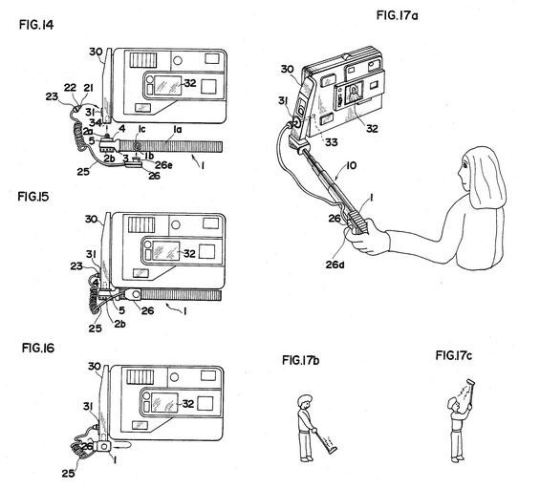
When he returned home to Japan he came up with the idea of the "Extender stick". It was telescopic and also had a little mirror that attached to the camera so that the photographer could see the picture he was taking.
The original patent for the Selfie Stick
Minolta thought that the idea was brilliant and set the idea into production.
It turned out to be a flop. Research showed that the women of the time were embarrassed at taking photos of themselves... how times have changed eh?
Minolta dropped the idea and did not renew the patent when it expired in 2003.
He said to the BBC:
"My idea came too early, but that's just one of those things".
You have to admire Hiroshi's pragmatism.
What may have helped Hiroshi and Minolta would have been to sanity check the innovation by using the Ten Types of Innovation.
The Ten Types of Innovation: The discipline of building breakthroughs by Larry Keeley describes ten different forms of innovation that they found after studying the subject for years.
Distilled down, it suggests that innovators should consider the following questions:
  1. What ways could the product make money ?
  2. Who could the business’s partnership to make products better?
  3. How you could you approach the way people or equipment are used within the business to make the product?
  4. How could changing the work practices introduce a new innovation because of the product?
  5. What features in a product’s functionality could be used that would be good for business?
  6. What additional products could be made that complement the existing idea?
  7. How would you make customers love their interactions with your product?
  8. How do you get the products to your customers in a new and innovative way?
  9. What ways can you make your product recognisable to your customers?
  10. How can you make a meaningful relationship between the product and the customer?
As a good salesman will tell you, when selling a proposition it’s so much easier to sell a solution that covers more than one base.
Often innovators will concentrate their efforts on the development of a product.
It certainly seems to be the case with Hiroshi's Extender stick. By not taking into account the quality of the resulting image; the difficulty of managing a heavy camera on the end of a stick; or the culture of taking photographs at the time. His idea was relegated to another Chindogu style "un-useless" invention. You can see my collection of Chindogu here.
When you are in the process of considering innovation, I’d advise that you make sure that your idea has solutions that consider all the areas innovation can touch… the Business Configuration, the Customer Experience and the Product Offering.
Maybe If he had stuck with it, today's selfie stick could have been the Minolta Extender...
But as Hiroshi says:
"I patented about 300 ideas, so that was just one of them. We call it a 3am invention - it arrived too early."
A premature innovation.

FURTHER INFORMATION

I hope you find this article interesting, check out my ebook,  Innovation Muscle. Its a short sharp read as to how you and your team can innovate fresh powerful ideas. Using these processes you will be able to create ideas that punch above their weight.

Innovation Muscle
Techniques to Make your Innovations Punch Above their Weight

Anyone purchasing the book will receive not one, but TWO FREE mini e-books that are supplied directly as PDF files to your inbox. These can be distributed to you team when starting a new project or used simply to sanity check your existing processes.

Photo licensed from Stock photo © Dangubic